Jul 30, 2026sodium ion battery
Sodium-Ion Motorcycle Battery Advantages
Learn core Sodium-Ion Motorcycle Battery Advantages including superior cold resistance, longer cycle life, lower TCO and higher profit for global motorcycle battery distributors
The 2025 Global Two-Wheeler Battery Market Report shows that sodium-ion motorcycle battery demand across global emerging markets increased by 82% year-on-year in 2024, outpacing lead-acid battery growth by 6x. As the latest generation of two-wheeler energy storage solutions, sodium-ion motorcycle battery advantages are driving a fundamental shift in the motorcycle battery market, creating new revenue opportunities for industry partners. Unlike legacy battery technologies that have seen minimal performance improvements over the past two decades, sodium-ion models address core pain points for both end users and supply chain partners, positioning them as the dominant product category for the next 10 years of the motorcycle industry.
Sodium-Ion vs Lead Acid Motorcycle Battery: Performance & Profit Gap Analysis
Core Sodium-Ion Motorcycle Battery Performance Advantages In Real-World Use
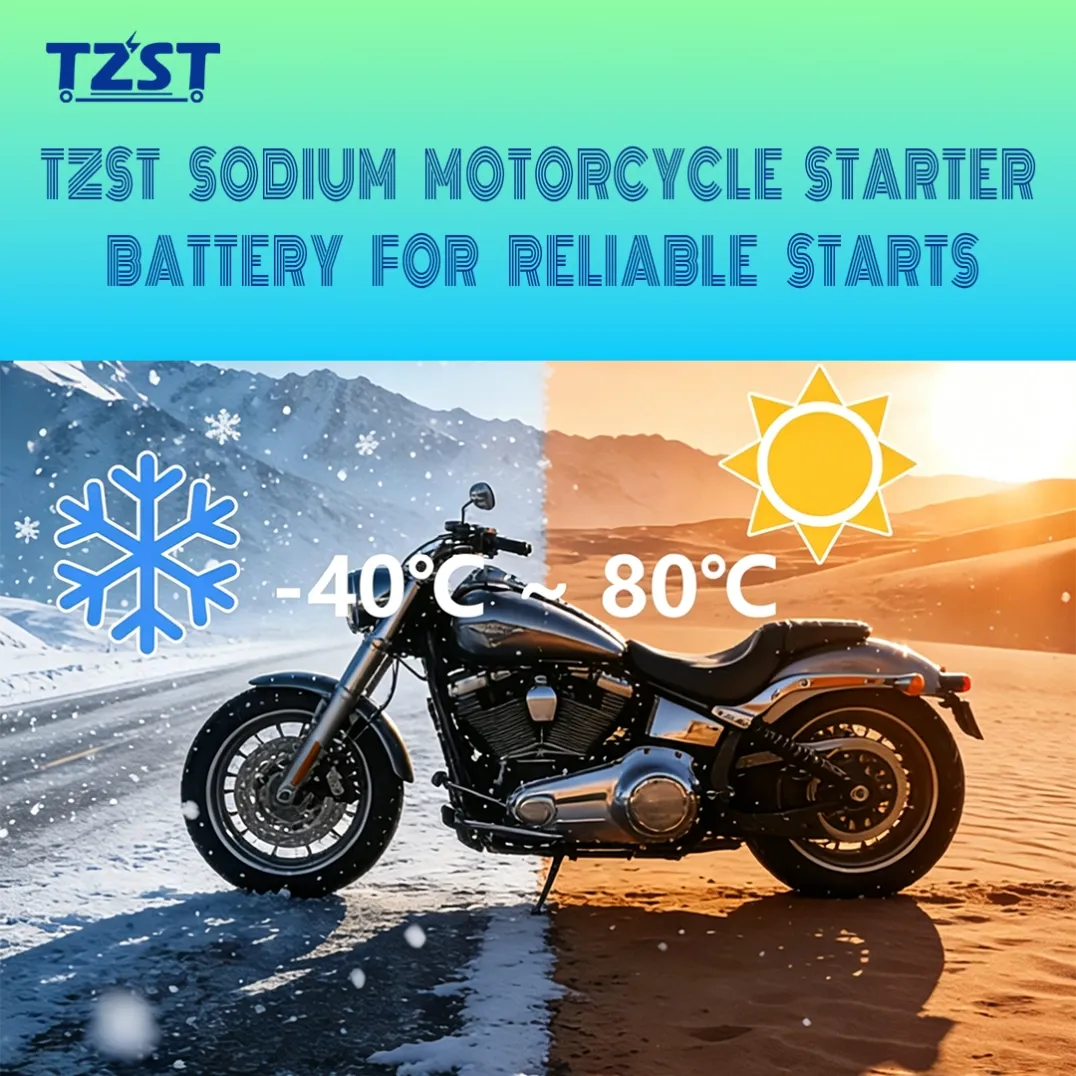
Independent third-party laboratory testing confirms multiple core sodium-ion motorcycle battery advantages over traditional lead-acid alternatives. In -20°C cold temperature environments, a sodium-ion motorcycle battery retains 91% of its rated capacity, compared to just 42% for equivalent lead-acid models, eliminating the common cold-start failure issue that plagues end users in high-altitude and cool climate regions. The average cycle life of a standard sodium-ion motorcycle battery reaches 2100 full charge-discharge cycles, 3.2x longer than equivalent lead-acid batteries, reducing end-user replacement frequency significantly. Weighing 48% less than lead-acid batteries of the same 12V 5Ah capacity, sodium-ion models reduce overall motorcycle weight, improving fuel efficiency by 3-5% for daily commuter use. Safety testing shows that sodium-ion motorcycle batteries do not catch fire or explode even when punctured, overcharged, or exposed to 60°C continuous high temperature, addressing core safety concerns for motorcycle users operating in tropical and subtropical regions with high humidity and year-round high temperatures.
Sodium-Ion vs Lead Acid Motorcycle Battery: TCO & Margin Comparison Data
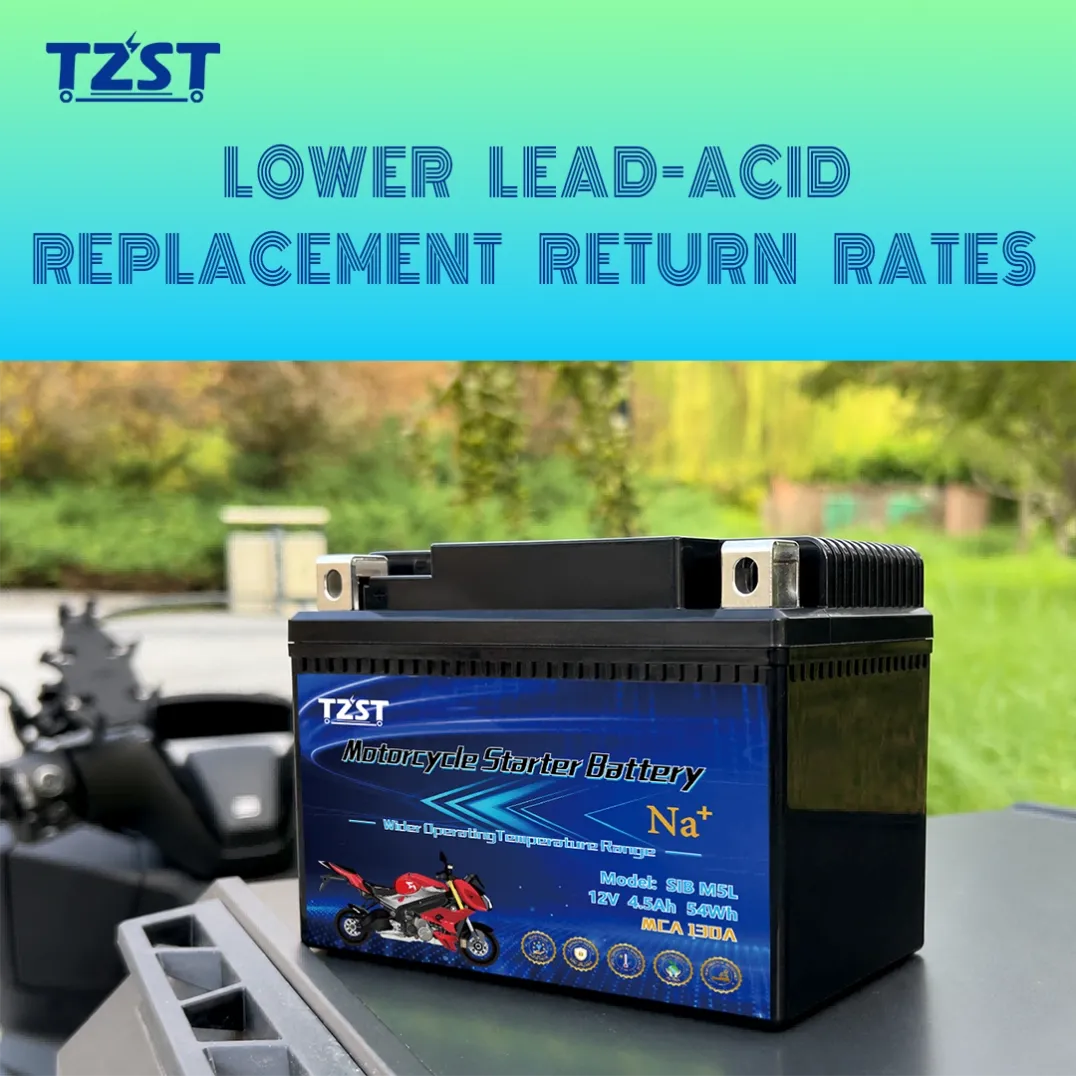
According to the 2025 Asia-Pacific motorcycle Component Industry White Paper, the average gross margin for lead-acid motorcycle battery distribution sits between 8-12%, while sodium-ion motorcycle battery margins range from 22-28%, creating a 14-16% higher profit per unit sold. When calculating total cost of ownership for end users, a sodium-ion motorcycle battery costs 37% less over a 4-year usage period compared to a lead-acid battery, as it requires no regular maintenance and has a much longer service life. TZST internal sales data collected from 120 global distribution partners in 2024 shows that partners who added sodium-ion motorcycle battery lines to their portfolio saw an average 32% increase in overall battery category revenue within 6 months, with product return rates 78% lower than their previous lead-acid product lines. The lower return rate is directly tied to the 0.12% field start failure rate of sodium-ion models, compared to 1.8% for lead-acid batteries, reducing post-sales issue resolution workload significantly.
Latest Sodium-Ion Battery News: Integrated Support To Boost Market Penetration
End-User Education Content Package To Reduce Purchase Resistance
The biggest barrier to sodium-ion motorcycle battery market adoption is low end-user awareness of its benefits, which is why we provide a complete end-user education content package for all our partners. The content package includes professionally produced short videos demonstrating cold-start performance at -20°C, side-by-side weight and safety tests with lead-acid batteries, illustrated guides explaining core sodium-ion motorcycle battery advantages, and point-of-sale answer manuals for installation store staff. All content is localized for different regional markets, with subtitles in 7 Southeast Asian languages and adapted to local user usage scenarios, such as high-humidity rainy season performance and long-distance commuter durability testing results. The content package is designed to address common end-user pain points directly, including cold-start failure, short battery life, and frequent maintenance requirements, reducing customer purchase resistance at the point of sale by 59% according to partner field test data collected in 2024.
Dual Push-Pull Marketing Support For Sustainable Sales Growth
To accelerate market adoption of sodium-ion motorcycle batteries, we provide a full range of dual push-pull marketing support, rather than only supplying the product itself. On the consumer pull side, we design targeted promotional activities for end motorcycle users, including trade-in subsidy programs, cold-season performance guarantee initiatives, and co-branded promotion activities with leading motorcycle brands and rider clubs. These activities are rolled out simultaneously across offline retail locations and social media platforms including TikTok and Facebook, directing qualified customer traffic directly to our partners’ channel networks. On the channel push side, we provide exclusive sales incentives for installation partners, professional installation and sales training programs, and branded point-of-sale materials including product posters and side-by-side display stands for sodium-ion vs lead acid motorcycle battery performance comparison. Our training programs focus on communicating the core sodium-ion motorcycle battery advantages and higher profit margins to sales staff, with proven success cases from existing partners to build sales confidence. According to the latest sodium-ion battery news from our 2024 global partner survey, partners who utilized our full marketing support package saw a 47% higher sales growth rate for sodium-ion motorcycle batteries compared to partners who only received product supply.
The sodium-ion motorcycle battery market is still in its early growth stage, with huge untapped demand across global emerging markets. By leveraging proven sodium-ion motorcycle battery advantages and comprehensive marketing support, partners can capture first-mover market share and build long-term sustainable revenue streams in this fast-growing category.